Poster

Any resource that is ideal for enlarging and using for classroom display

A PowerPoint presentation about homophones which includes a quiz, followed by a visual aid poster (pictured), an information sheet / handout, a workbook and an extension sheet.

Editor's notes

Great set of resources - PPT can be adapted to suit your own learners and the extra handouts and task sheets all help with consolidation. The final extension sheet has a useful emphasis on using mnemonics.  

Level
Entry Level 2
Entry Level 3
Level 1
English
FE E2.16 Spell correctly words designated for Entry Level 2
FE E3.17 Spell correctly words designated for Entry Level 3
FE L1.21 Spell words used most often in work, study and daily life, including specialist words
ESOL
ESOL Ww/E3.1a Apply spelling knowledge to a wide range of common & special-interest words
ESOL Ww/L1.1a Apply knowledge about vocabulary to aid accurate spelling
ESOL Ww/L1.1b Use strategies to aid accurate spelling

This resource is aimed at Entry Level ESOL and/ Functional English. It discusses the widespread use of lithium batteries, the dangers they pose and how to dispose of them safely.

Level
Entry Level 1
Entry Level 2
Entry Level 3
English
FS Eng SL&C Discussion
FE E1.10 Understand a short piece of text on a simple subject
FE E2.8 Understand the main points in texts
FE E3.9 Identify, understand & extract main points & ideas in/from texts
FE E3.10 Identify different purposes of straightforward texts
FE 1.16 Communicate information in words, phrases & simple sentences
FE E2.17 Communicate information using words & phrases appropriate to audience & purpose
FE E3.20 Use appropriate format & structure inc. appropriate use of headings & bullet points
FE E3.18 Communicate information, ideas & opinions clearly & in logical sequence e.g. chronologically, by task
FE E3.19 Write text of appropriate length & level of detail
Pre-entry
pre-Entry General
ESOL
ESOL Sd/E1.1a Take part in social interaction
ESOL Sd/E2.1a Take part in social interaction
ESOL Sd/E3.1a Take part in social interaction
ESOL Rt/E1.1a Follow a short narrative on a familiar topic or experience
ESOL Rt/E1.1b Obtain information from texts
ESOL Rt/E2.1a Use a range of strategies to trace & understand main events
ESOL Rt/E3.1a Understand how meaning is built up in a variety texts of more than one paragraph
ESOL Wt/E1.1a Compose very simple text to communicate ideas or basic information
ESOL Wt/E2.1a Compose simple text, selecting appropriate format for the genre and purpose
ESOL Wt/E3.2a Structure main points in short paragraphs
General
Generic resources for literacy, numeracy and beyond
Context
Health and safety
Recycling, the environment and sustainability
Electrical, Electronics & Technology

Part of the Living in the UK series.

This resource covers the difficult but very real issue of domestic abuse. The information is provided sensitively and includes information and questions about Clare's Law, and an invented but realistic situation. 

Discretion is advised but it is an important and often sidestepped safeguarding issue. Whilst there is a plethora of information, I found not all of it was suitable nor accessible enough for meeting the needs of my learners. 

Level
Entry Level 2
Entry Level 3
Level 1
Level 2
English
FE E3.9 Identify, understand & extract main points & ideas in/from texts
FE L1.9 Identify & understand the main points, ideas & details
FE L2.11 Identify when main points are sufficient & when specific details are important
ESOL
ESOL Rt/E3.1a Understand how meaning is built up in a variety texts of more than one paragraph
ESOL Rt/L1.1a Understand how meaning is built up in paragraphed texts
ESOL Rt/L2.1a Identify different ways meaning is built up in a range of texts of varying genres
ESOL Rt/E3.4a Extract the main points and ideas, and predict words from context.
ESOL Rt/L1.3a Understand how main points and specific detail are presented and linked
ESOL Rt/L2.3a Identify the main points and specific detail in different types of text of varying lengths & detail
ESOL Rt/L1.5a Use skimming, scanning and detailed reading in different ways for different purposes
ESOL Skimming, scanning & detailed reading
Context
Equality and safeguarding
Mental health, awareness & psychology

An ESOL E1-2 (Local Community) reading comprehension with related writing activities that links to ESOL E1 type assessments. This set of resources explores every day, local or community activities: in this case the local library or community hub. Use as a whole class resource and/or independent learning/homework. 

Finally, there is a list of suggestions for extension activities around using the library/hub in your local area.  

Editor's notes

Level
Entry Level 1
Entry Level 2
English
FE E1.10 Understand a short piece of text on a simple subject
FE E2.8 Understand the main points in texts
FS Eng E2.12 Use illustrations, images & captions to locate information
FE E2.18 Complete a form asking for personal information (e.g. first name, surname, address, postcode, age, date of birth)
FE E2.17 Communicate information using words & phrases appropriate to audience & purpose
ESOL
ESOL Rt/E1.1a Follow a short narrative on a familiar topic or experience
ESOL Rt/E2.1a Use a range of strategies to trace & understand main events
ESOL Rt/E2.4a Obtain information from illustrations, maps, diagrams and captions
ESOL Wt/E1.1a Compose very simple text to communicate ideas or basic information
ESOL Wt/E2.1a Compose simple text, selecting appropriate format for the genre and purpose
ESOL Wt/E2.1b Record information on forms
Context
History, culture, museums, libraries

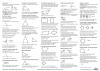
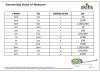
A two-sided A3 'place mat' that has the following

Level
GCSE L1-5
Maths
Properties and contructions

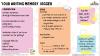
Supportive table mat designed for those re-sitting writing at L1 and L2.

Editor's note

Short, succinct and useful :) 

Level
Level 1
Level 2
English
Functional Skills English - writing

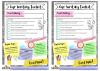
An A5 handout resource that acts as scaffolding for learners during the writing process at L1 and L2. The handout includes a proof-reading checklist, handy hints and tips and quick reminders of the elements of writing they must remember to include to ensure success. 

Editor's note

Beautiful and incredibly useful. 

Level
Level 1
Level 2
English
FE L1.19 Use a range of punctuation correctly (e.g. full stops, question marks, exclamation marks, commas, possessive apostrophes)
FE L2.20 Punctuate writing correctly using a wide range of punctuation markers e.g. colons, commas, inverted commas, apostrophes, quotation marks
FS Eng L1.25 Write consistently & accurately in complex sentences, using paragraphs where appropriate
FS Eng L2.28 Construct complex sentences consistently & accurately, using paragraphs where appropriate
FE L1.24 Use format, structure & language appropriate for audience & purpose
FE L2.27 Use language & register (e.g. persuasive techniques, supporting evidence, specialist words) to suit audience & purpose

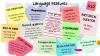
A visually appealing double-sided A4 handout to aid L1 and L2 learners in their revision of language features and organisational features they will need to know for Edexcel FS exams.

Editor's note

Just beautiful! And very useful for end of year consolidation and revision.

Level
Level 1
Level 2
English
FE L1.12 Recognise that language & other textual features can be varied to suit different audiences & purposes
FE L2.14 Understand how textual features/devices can shape meaning for different audiences/purposes
FE L1.14 Understand organisational / structural features use to locate relevant information
FE L2.16 Understand organisational features & use to locate relevant information in a range of sources

A reading comprehension exercise differentiated Entry Level 2 and Entry Level 3 Functional Skills English. 

Based on an article from Spring 2020 about finding wild plants in towns.  Designed for a mixed ability class so that everyone could be working on the same theme.  [An E1 version is also available]. Questions cover almost all E2 and E3 FS Reading criteria and allow for practice in sentence writing as well as comprehension.

Level
Entry Level 2
Entry Level 3
English
FE E2.7 Read correctly words designated for Entry Level 2
FE E2.8 Understand the main points in texts
FE E2.10 Use effective strategies to find words meanings & check spelling e.g. simple dictionary, spell-checker

FE E2.11 Read & understand sentences with more than one clause
FS Eng E2.12 Use illustrations, images & captions to locate information
FE E3.8 Read correctly words designated for Entry Level 3
FE E3.9 Identify, understand & extract main points & ideas in/from texts
FE E3.10 Identify different purposes of straightforward texts
FE E3.11 Use strategies to find meaning of words e.g. dictionary, context, word types
FE E3.12 Understand organisational features & use them to locate relevant information
Context
Science, Nature & Weather

A set of  Entry Level 1 Functional English tasks based on an article from Spring 2020 about finding wild plants in towns. Designed for a mixed ability class so that everyone could be working on the same theme. [An E2-3 version is also available]. Includes multiple choice comprehension questions; sentence writing, punctuation and alphabetical order questions; and speaking and listening activities.

Level
Entry Level 1
English
FS Eng E1.1 Say the names of the letters of the alphabet
FE E1.4 Make requests & ask straightforward questions using appropriate terms & registers
FE E1.5 Respond to questions about specific information
FS Eng E1.6 Make clear statements, communicate feelings & opinions on straightforward topics
FE E1.7 Understand & participate in simple discussions or exchanges with another person about a straightforward topic
FE E1.8 Read correctly words designated for Entry Level 1
FE E1.9 Read simple sentences containing one clause
FE E1.10 Understand a short piece of text on a simple subject
FE E1.11 Punctuate simple sentences with capital letter & full stop
FE E1.12 Use capital letter for pronoun ‘I’ and proper nouns
FE E1.13 Use lower-case letters when there is no reason to use capital letters
FE 1.14 Write letters of alphabet in sequence & in upper / lower case
FE 1.16 Communicate information in words, phrases & simple sentences
Context
Science, Nature & Weather