ESOL Rt/E1.1b Obtain information from texts

Obtain information from texts (i) Understand social sight words and symbols, including ways of expressing prohibition (ii) Use context and key word recognition to infer meaning, i.e. know it is not always necessary to read every word in order to comprehend or gain information from text
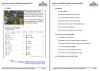
This is an adapted version of Colleen Kelly's very useful Understanding the UK. I've made a few changes and shortened the text, as this is how I would like to use it with my particular class. I think the first part of Colleen's text provides some really good models of language for describing countries which I want my class to use and adapt to describe other countries as well as learning a little bit about the UK.  

Level
Entry Level 1
Entry Level 2
English
FE E1.10 Understand a short piece of text on a simple subject
FE E2.8 Understand the main points in texts
ESOL
ESOL Rt/E1.1a Follow a short narrative on a familiar topic or experience
ESOL Speaking (S)
ESOL Rt/E1.1b Obtain information from texts
ESOL Rt/E2.1a Use a range of strategies to trace & understand main events
Context
History, culture, museums, libraries

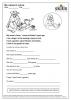
A short story about a family day out.  The family go pond-dipping.  Easy to read with two lovely images to spark discussion and interest.  Worksheet to be given after reading the text. The second part of the worksheet should be completed without the text (if possible). Entry 1 to E2.  Some support may be needed at E1. Also a more complex / longer version for Entry 3 to lower L1.

Editor's notes

Level
Entry Level 1
Entry Level 2
Entry Level 3
Level 1
English
FE E1.10 Understand a short piece of text on a simple subject
FE E2.8 Understand the main points in texts
FE E3.9 Identify, understand & extract main points & ideas in/from texts
FE L1.9 Identify & understand the main points, ideas & details
FE E2.13 Use basic punctuation correctly (e.g. full stops, question, exclamation marks)
FE E1.13 Use lower-case letters when there is no reason to use capital letters
FE L1.19 Use a range of punctuation correctly (e.g. full stops, question marks, exclamation marks, commas, possessive apostrophes)
ESOL
ESOL Rt/E1.1a Follow a short narrative on a familiar topic or experience
ESOL Rt/E1.1b Obtain information from texts
ESOL Rt/E2.1a Use a range of strategies to trace & understand main events
ESOL Ws/E2.4a Use a capital letter for proper nouns
ESOL Ws/E1.1a Construct a simple sentence, using basic word order & verb form
ESOL Ws/E2.3a Use correct punctuation, e.g. capital letters, full stops, question marks
ESOL Writing: word focus - spelling and handwriting (Ww)
ESOL Rt/E3.1a Understand how meaning is built up in a variety texts of more than one paragraph
ESOL Rt/L1.1a Understand how meaning is built up in paragraphed texts
ESOL Rs/L1.2a Use punctuation to help understanding
Context
Science, Nature & Weather

Learners explore the contributions of five black (US) scientists and inventors. Suitable for Entry Levels 1, 2 & 3 and beyond.

Editor's notes

An interesting multi-purpose PPT that be used to focus on listening, reading or writing skills. Makes a complete lesson: warm up discussion, video link, Guess Who? quizzes and a final research / writing task.


Level
Entry Level 1
Entry Level 2
Entry Level 3
English
FS Eng E1.2 Identify & extract the main information from short statements & explanations
FS Eng E2.1 Identify & extract main information & detail from short explanations
FS Eng E3.1 Identify & extract relevant information & detail in straightforward explanations
FE E1.10 Understand a short piece of text on a simple subject
FE E2.8 Understand the main points in texts
FE E3.9 Identify, understand & extract main points & ideas in/from texts
FE 1.16 Communicate information in words, phrases & simple sentences
FE E2.17 Communicate information using words & phrases appropriate to audience & purpose
FE E3.18 Communicate information, ideas & opinions clearly & in logical sequence e.g. chronologically, by task
ESOL
ESOL Lr/E1.2a Listen for detail in short narratives and explanations
ESOL Lr/E2.2a Listen for detail in narratives and explanations
ESOL Lr/E3.3a Listen for relevant and new information on radio, TV, video, in face-to-face situations, and over the phone
ESOL Rt/E1.1a Follow a short narrative on a familiar topic or experience
ESOL Rt/E1.1b Obtain information from texts
ESOL Rt/E3.1a Understand how meaning is built up in a variety texts of more than one paragraph
ESOL Wt/E1.1a Compose very simple text to communicate ideas or basic information
ESOL Wt/E2.1a Compose simple text, selecting appropriate format for the genre and purpose
ESOL Wt/E3.2a Structure main points in short paragraphs
Context
History, culture, museums, libraries

updated 3/12/24 (phone number on slide 6 corrected from 111 to 101)

A PowerPoint exploring the emergency services including 112 and gas emergencies. Simple text with images to encourage discussion and awareness concerning what is and what is not classed as an emergency. There is also a set of printable flash cards with suggestions.

Editor's notes

Level
Entry Level 1
Entry Level 2
Entry Level 3
English
FS Eng E1.2 Identify & extract the main information from short statements & explanations
FS Eng E2.1 Identify & extract main information & detail from short explanations
FS Eng E3.1 Identify & extract relevant information & detail in straightforward explanations
FE E1.7 Understand & participate in simple discussions or exchanges with another person about a straightforward topic
FE E2.6 Make appropriate contributions to simple group discussions with others about a straightforward topic
FE E3.6 Make relevant contributions to group discussions about straightforward topics
FE E1.10 Understand a short piece of text on a simple subject
FE E2.8 Understand the main points in texts
ESOL
ESOL Rt/E1.1b Obtain information from texts
ESOL Rw/E2.2a Recognise a range of familiar words
ESOL Lr/E1.2a Listen for detail in short narratives and explanations
ESOL Lr/E2.4a Listen to, follow and respond to explanations, directions and instructions
ESOL Lr/E3.3a Listen for relevant and new information on radio, TV, video, in face-to-face situations, and over the phone
Context
Health and safety
Independent living

This resource is useful for lessons relating to sports and diversity. It includes reading comprehension, alphabetical ordering, reading simple instructions, using a map/key, and a short writing task.

Editor’s note
Written for E1-E2 ESOL students but also suitable for E1-2 Functional English.

Level
Entry Level 1
Entry Level 2
English
Functional English - writing
Rw/E3.4
Rw/E2.4
Functional English reading
ESOL
ESOL Ww/E1.2a Form the letters of the alphabet using upper and lower case
ESOL Rw/E2.5a Sequence words using basic alphabetical ordering skills
ESOL Rt/E1.1b Obtain information from texts
Context
Sport and fitness

Photos and pictures to match with accounts of real emergency situations. All in the present tense. All the accounts are true. Accounts can be cut in to strips and given to pairs of learners who can put them in to a sequence to tell a story. Leads to discussion on how we tell a story, and how we sequence sentences to make sense.
Lots of new, real life vocabulary to provoke discussion.
Some stories shorter and simpler than others to allow for differentiation in group.

Level
Entry Level 2
Entry Level 1
English
AL Rt/E2.1 Follow main points of short texts
AL Rt/E1.1 Read short familiar texts
Functional English reading
ESOL
ESOL Rt/E2.1a Use a range of strategies to trace & understand main events
ESOL Rt/E1.1b Obtain information from texts
Context
Employment skills & Public services

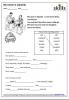
An easy reading for beginners followed by complete the sentence exercise and a prompt to write about themselves. Two sheets – one for British students, one for Australian learners.

Level
Entry Level 1
English
AL Rt/E1.1 Read short familiar texts
ESOL
ESOL Rt/E1.1b Obtain information from texts
ESOL Rt/E1.1a Follow a short narrative on a familiar topic or experience

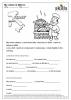
A short reading text for beginners followed by comprehension exercises. Useful for revising early family vocabulary.

Level
Entry Level 1
English
AL Rt/E1.1 Read short familiar texts
ESOL
ESOL Rt/E1.1b Obtain information from texts
ESOL Rt/E1.1a Follow a short narrative on a familiar topic or experience

A short reading text for beginners, followed by fill the gap sentences. Two sheets – one for British students and one for Australian students.

Level
Entry Level 1
English
AL Rt/E1.1 Read short familiar texts
ESOL
ESOL Rt/E1.1b Obtain information from texts
ESOL Rt/E1.1a Follow a short narrative on a familiar topic or experience
Context
Catering Food Nutrition

A fabulous set of integrated activities that cover food vocabulary, use of is/are, paired speaking and listening practice (asking the price of food – with fill-in dialogue cards), reading and writing shopping lists.

Level
Entry Level 1
ESOL
ESOL Rw/E1.1a Recognise a limited number of words, signs and symbols
ESOL Rt/E1.1b Obtain information from texts
ESOL Rs/E1.1a Read and recognise simple sentence structures:
ESOL Sc/E1.3b Ask for information
ESOL Sc/E1.4d Make statements of fact clearly
ESOL Ws/E1.1a Construct a simple sentence, using basic word order & verb form
Context
Catering Food Nutrition
Independent living
Retail Hospitality Customer service