Free Functional Skills and Skills for Life resources
Site Search
ESOL Rs/L1.2a Use punctuation to help understanding
Use punctuation to help understanding (i) Recognise a range of punctuation, including colons, speech marks, brackets, and apostrophes, to indicate contractions and possessives in informal style
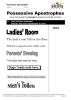
Major update 19/01/24 written in 2005 but updated and re-mapped to reflect the Reformed Functional English Content. Page one is will prompt discussion and is probably best tackled in pairs or small groups. Page 2 is a handout with plenty of examples to study before moving on to the final pages of challenging exercises.
Answers are available (resource contributors only) please seeanswer sheets page for more details
Level
Level 1
Level 2
English
AL Ws/L2.4 Use apostrophes & inverted commas
Adult Lit Rs/L2.2 Use punctuation to help interpret the meaning and purpose of texts
Apostrophes
FE L1.18 Use knowledge of punctuation to aid understanding of texts
FE L1.19 Use a range of punctuation correctly (e.g. full stops, question marks, exclamation marks, commas, possessive apostrophes)
FE L2.20 Punctuate writing correctly using a wide range of punctuation markers e.g. colons, commas, inverted commas, apostrophes, quotation marks
ESOL
ESOL Ws/L1.3a Use punctuation to aid clarity and meaning
ESOL Ws/L2.4a Use a range of punctuation to achieve clarity in simple and complex sentences
ESOL Rs/L1.2a Use punctuation to help understanding
ESOL Rs/L2.2a Use wide range of punctuation to help interpret meaning and purpose
Entry 3 activity to reinforce the importance of good attendance and punctuality in college. First activity asks students to choose and circle the correct word and further activities practise spelling, grammar, vocabulary and punctuation at Entry 3 level.
Editor's notes
A brilliant idea and excellent practice for ESOL students - especially at the start of the academic year.
Level
Entry Level 3
Level 1
English
Use knowledge of punctuation and capitalisation
ESOL
General ESOL
ESOL Rs/E3.2a Recognise function of CLs, full stops, commas, question- exclamation- and speech marks, bullet points /numbering
ESOL Rs/L1.2a Use punctuation to help understanding
ESOL Rs/E3.1b Use knowledge of syntax and grammar to work out meaning
ESOL Rs/L1.1a Use implicit & explicit grammatical knowledge to predict meaning & check for sense
ESOL Ww/E3.1a Apply spelling knowledge to a wide range of common & special-interest words
ESOL Ww/E3.1b Apply knowledge of strategies to aid with spelling
ESOL Ww/L1.1a Apply knowledge about vocabulary to aid accurate spelling
ESOL Ww/L1.1b Use strategies to aid accurate spelling
ESOL Rw/E3.5a Use variety of reading strategies to read/understand unfamiliar words
ESOL Rt/E3.1a Understand how meaning is built up in a variety texts of more than one paragraph
ESOL Rt/L1.5a Use skimming, scanning and detailed reading in different ways for different purposes
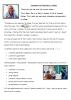
This interesting report on an overseas sportsman in UK allows for work in ESOL. The report covers a footballer who wishes to live in Cardiff and previously moved from Birmingham to Moscow. The comprehension questions cover his career and the people that influence his life. A conversation between the journalist and player allows for forming questions and the last task is a writing opportunity.
Editor's note
Also suitable for Functional English - see the notes within the resource. I love the dialogue exercise. :)
Level
Entry Level 3
Level 1
English
FE L1.2 Make requests & ask relevant questions to obtain specific information
FE E3.9 Identify, understand & extract main points & ideas in/from texts
FE Writing composition
ESOL
ESOL Sc/E3.3b Ask questions to obtain personal or factual information
ESOL Rt/E3.4a Extract the main points and ideas, and predict words from context.
ESOL Rs/L1.2a Use punctuation to help understanding
Another expertly adapted text with ten missing apostrophes. Includes apostrophes of omission and possession (some example are challenging).
Inspired by Rachel Emmett’s ‘Capello Gerrard World Cup apostrophes’ resources (see below).
Level
Level 2
Level 1
English
AL Ws/L2.4 Use apostrophes & inverted commas
Rs/L1.2
ESOL
ESOL Ws/L2.4a Use a range of punctuation to achieve clarity in simple and complex sentences
ESOL Rs/L1.2a Use punctuation to help understanding