Updated Apr 19 2024 (corrections made to pages 1&3 of the main PDF and page 2 of "Your Budget")
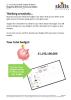
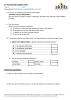
This resources uses the Spring 2024 budget and makes it accessible for learners on L1 and L2 English courses. The resource gives them the budget break down and some comprehension questions based on L1 and L2 reading exams.
Learners are then asked to design their own budget and think about why they would give money to certain areas outlined in the budget.
Level
Level 1
Level 2
English
FS Eng L1.5 Express opinions and arguments and support them with evidence
FS Eng L2.6 Express opinions and arguments and support them with relevant and persuasive evidence
FE L1.13 Use reference materials & appropriate strategies for a range of purposes, inc. to find word meanings
FE READING understanding and locating information
FE L1.18 Use knowledge of punctuation to aid understanding of texts
Maths
FM L1.1 Read, write, order & compare large numbers (up to one million)
FM L2.1 Read, write, order & compare positive & negative numbers of any size
A new series of comprehensive Functional Skills Maths books now available from talented mathematician and teacher Marsida Horeshka who you may already know from her popular Functional Skills maths site https://marscademy.com/(previously known as Maths Made Fun). The three Entry Level books are now available on Amazon (and soon from other booksellers).
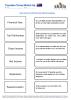
A quick but very useful match-up activity that makes a good starter activity for financial literacy or employment skills courses - and it's bound to prompt discussion.
Editor's note
Written for an Australian audience but I have added a UK version on page 2. Learners can draw lines to match the items or, for a reusable resource, the page could be laminated and/or cut into 12 cards.
Level
Level 1
Level 2
Maths
Functional Maths
General numeracy / maths
Popular topics
General
Generic resources for literacy, numeracy and beyond
Since the demise of the Excellence Gateway (EG) on September 30 2023, there is no official Government backed website where the old Skills for Life core curricula are available. The EG has (partially) migrated to the Education & Training Foundation (ETF) at https://www.et-foundation.co.uk/ but there is no sign of these classic documents.
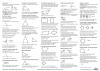
Simon from Here to Teach (HTT) has many wonderful work-throughs of Edexcel and C&G Functional Maths papers (E3 , L1, L2). Well paced with very excellent audio and video, showing clear methods and working out c. Marvellous for learners to watch over and over as many times as needed. Both non-calculator and non-calculator papers are covered. This paper has a floristry theme but provides practice and revision for any vocational area (or indeed no vocational area!).
I recommend subscribing to Simon's channel to keep up-to-date with all his maths videos.
An incredible collection of free worksheets from OUP. Designed to support the excellent book ‘Maths the Basics’ by June Haighton et al (see our separate entry about this book) but can be used independently. I haven’t looked at them all ( there are more than a 100 - plus answer sheets!) but they seem to cover Entry Level 3 to Level 2.
In addition there are many other useful downloads including tips and hints for non-specialists on delivering Functional Skills maths, English and ICT and much more.
I’ve only briefly skimmed through but some of these new mastery resources for L1 & L2 Functional Maths (and GCSE resits) look amazing! Includes full 33 hour (22 x 1.5 hr lessons) schemes of work, lesson plans, handouts and slides.