FS Eng E2.12 Use illustrations, images & captions to locate information

Reformed Functional Skills English > Reading > Use Organisation features to locate information > E2.12 Use illustrations, images and captions to locate information

For a clickable list of resources that cover this specific curriculum element keep SCROLLING DOWN or explore the related links below

Subject content [reformed] functional skills: English (DfE, Feb 2018): 
https://www.gov.uk/government/publications/functional-skills-subject-content-english

Related Adult Literacy links and example activities (Adult Literacy Core Curriculum, DfES, 2001):  Rt/E2.2 Use illustrations and captions to locate information) (a) Understand that illustrations contribute to meaning and can help locate and interpret information.         

  •  Match statements to illustrations, e.g. newspaper headlines to photographs.
  • Choose a subject of use or interest and identify some information required.
  • Choose a suitable text and use the illustrations as a guide to where in the text the information is likely to be. Check if it is there.
  • Match common icons to their meaning and/or purpose (e.g. save, cut, paste).

Related Adult ESOL links and example activities (Adult ESOL Core Curriculum, DfES, 2001) : Rt/E2.2a: obtain information from illustrations, simple maps and diagrams and captions.  

  • Read a simple map and find the right road for the address provided on a leaflet.
  • Look at the pictures in a mail-order catalogue and decide what to buy.
  • Use illustrations that accompany a set of instructions to check progress.
  • Learners are given a series of illustrations from a magazine or newspaper, and the page numbers on which the illustrations appear. They are asked which pages in the catalogue or newspaper have certain items or news stories, and discuss how illustrations can be useful to the reader (i.e. they can assist with locating information and can help the reader to understand the text).
  • Looking at a range of illustrations from a newspaper, a story or instructions, learners predict the likely content of the text  
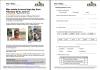
A set of activities based on the Ask for Angela scheme, an important initiative set up with the aim of keeping people in social situations safe. 

The tasks include reading comprehension, SPaG and writing tasks, along with research and discussion opportunities. Planning should be encouraged as part of the writing tasks. There's also a separate task on organisational and presentational features using two Ask for Angela posters.

Level
Entry Level 3
Level 1
Level 2
English
FE L1.6 Follow / understand discussions & make contributions relevant to situation & subject
FE L2.8 Make relevant and constructive contributions to move discussion forward
FS Eng E2.12 Use illustrations, images & captions to locate information
FE E3.12 Understand organisational features & use them to locate relevant information
FE L1.14 Understand organisational / structural features use to locate relevant information
FE L2.16 Understand organisational features & use to locate relevant information in a range of sources
FE L1.9 Identify & understand the main points, ideas & details
FE L2.11 Identify when main points are sufficient & when specific details are important
FE L1.19 Use a range of punctuation correctly (e.g. full stops, question marks, exclamation marks, commas, possessive apostrophes)
FE L1.12 Recognise that language & other textual features can be varied to suit different audiences & purposes
FE L2.14 Understand how textual features/devices can shape meaning for different audiences/purposes
FE L2.20 Punctuate writing correctly using a wide range of punctuation markers e.g. colons, commas, inverted commas, apostrophes, quotation marks
FE L1.24 Use format, structure & language appropriate for audience & purpose
FE L2.27 Use language & register (e.g. persuasive techniques, supporting evidence, specialist words) to suit audience & purpose
ESOL
ESOL Rt/E3.4a Extract the main points and ideas, and predict words from context.
ESOL Rt/L1.3a Understand how main points and specific detail are presented and linked
ESOL Rt/L2.3a Identify the main points and specific detail in different types of text of varying lengths & detail
ESOL Ws/E3.3a Use punctuation to aid clarity in relation to beginnings and ends of sentences
ESOL Ws/L1.3a Use punctuation to aid clarity and meaning
ESOL Ws/L2.4a Use a range of punctuation to achieve clarity in simple and complex sentences
ESOL Sd/L1.2a Express views and opinions
ESOL Sd/L2.1a Make relevant contributions and help to move discussions forward
ESOL Rt/E2.4a Obtain information from illustrations, maps, diagrams and captions
ESOL Rt/E3.5b Use organisational features in a range of reference sources
ESOL Rt/L1.4a Use organisational & structural features to locate information
ESOL Rt/L2.6a Use organisational features and systems to locate texts and information
ESOL Rt/L1.2a Know how language and other textual features are used to achieve different purposes
Context
Health and safety
Equality and safeguarding

Continuing with the theme “A celebration of British fruit”, this reading comprehension resource is about the delightful medlar fruit. At Levels 1 and 2 there are additional punctuation and grammar questions, spelling, and fact and opinion. There is also a speaking and listening group discussion/ presentation task. At Entry 3 there is a revised text with questions and discussion ideas. The final text is simplified for Entry 1 and 2 with some appropriate questions.

Editor's notes

Level
Entry Level 1
Entry Level 2
Entry Level 3
Level 1
Level 2
GCSE L1-5
English
FE E1.10 Understand a short piece of text on a simple subject
FE E2.8 Understand the main points in texts
FE E3.9 Identify, understand & extract main points & ideas in/from texts
FE L1.9 Identify & understand the main points, ideas & details
FE L1.11 Identify meanings in texts & distinguish between fact & opinion
FE L2.18 Follow an argument, identifying different points of view & distinguishing fact from opinion
FE E3.11 Use strategies to find meaning of words e.g. dictionary, context, word types
FE L1.17 Read & understand a range of specialist words in context
FE L1.13 Use reference materials & appropriate strategies for a range of purposes, inc. to find word meanings
FE E3.10 Identify different purposes of straightforward texts
FS Eng E2.12 Use illustrations, images & captions to locate information
FE E2.13 Use basic punctuation correctly (e.g. full stops, question, exclamation marks)
FE E3.13 Use a range of punctuation correctly (e.g. full stops, question marks, exclamation marks, commas)
FE E3.6 Make relevant contributions to group discussions about straightforward topics
FE L1.6 Follow / understand discussions & make contributions relevant to situation & subject
FE L2.8 Make relevant and constructive contributions to move discussion forward
ESOL
ESOL Sd/E3.1b Take part in more formal interaction
ESOL Sd/L1.2a Express views and opinions
ESOL Sd/L2.2c Express views, opinions, feelings, wishes
ESOL Sd/L2.2d Persuade, warn, rebuke, etc
ESOL Sd/L2.4a Support opinions and arguments with evidence
ESOL Rt/E1.1a Follow a short narrative on a familiar topic or experience
ESOL Rt/E2.1a Use a range of strategies to trace & understand main events
ESOL Rt/E3.4a Extract the main points and ideas, and predict words from context.
ESOL Rt/L1.3a Understand how main points and specific detail are presented and linked
ESOL Rt/E3.2a Distinguish between different purposes of texts at this level
ESOL Ws/E2.3a Use correct punctuation, e.g. capital letters, full stops, question marks
ESOL Ws/E3.3a Use punctuation to aid clarity in relation to beginnings and ends of sentences
Context
Catering Food Nutrition

An ESOL E1-2 (Local Community) reading comprehension with related writing activities that links to ESOL E1 type assessments. This set of resources explores every day, local or community activities: in this case the local library or community hub. Use as a whole class resource and/or independent learning/homework. 

Finally, there is a list of suggestions for extension activities around using the library/hub in your local area.  

Editor's notes

Level
Entry Level 1
Entry Level 2
English
FE E1.10 Understand a short piece of text on a simple subject
FE E2.8 Understand the main points in texts
FS Eng E2.12 Use illustrations, images & captions to locate information
FE E2.18 Complete a form asking for personal information (e.g. first name, surname, address, postcode, age, date of birth)
FE E2.17 Communicate information using words & phrases appropriate to audience & purpose
ESOL
ESOL Rt/E1.1a Follow a short narrative on a familiar topic or experience
ESOL Rt/E2.1a Use a range of strategies to trace & understand main events
ESOL Rt/E2.4a Obtain information from illustrations, maps, diagrams and captions
ESOL Wt/E1.1a Compose very simple text to communicate ideas or basic information
ESOL Wt/E2.1a Compose simple text, selecting appropriate format for the genre and purpose
ESOL Wt/E2.1b Record information on forms
Context
History, culture, museums, libraries

A bumper set of E1, E2 and E3 reading and writing resources. Can be used throughout leap year but probably best before or on February 29th! Based on a light hearted article from Metro newspaper there are two sets of reading tasks (one for E1-E2 and one for E2-E3), three writing composition tasks (E1, E2 and E3) and three sets of underpinning writing questions covering spelling, punctuation and alphabetical order at each Entry Level. Pretty much all Entry Level Content descriptors are covered. 

Level
Entry Level 1
Entry Level 2
Entry Level 3
English
FE E1.8 Read correctly words designated for Entry Level 1
FE E2.7 Read correctly words designated for Entry Level 2
FE E2.10 Use effective strategies to find words meanings & check spelling e.g. simple dictionary, spell-checker
FE E3.8 Read correctly words designated for Entry Level 3
FE E3.11 Use strategies to find meaning of words e.g. dictionary, context, word types
FE E1.10 Understand a short piece of text on a simple subject
FE E2.8 Understand the main points in texts
FE E3.9 Identify, understand & extract main points & ideas in/from texts
FS Eng E2.12 Use illustrations, images & captions to locate information
FE E2.9 Understand organisational markers in short, straightforward texts
FE E3.12 Understand organisational features & use them to locate relevant information
FE E1.9 Read simple sentences containing one clause
FE E2.11 Read & understand sentences with more than one clause
FE E3.10 Identify different purposes of straightforward texts
FE 1.14 Write letters of alphabet in sequence & in upper / lower case
FE E2.15 Use 1st & 2nd letters to sequence words alphabetically
FE E3.16 Use 1st, 2nd & 3rd letters to sequence words alphabetically
FE E1.11 Punctuate simple sentences with capital letter & full stop
FE E1.12 Use capital letter for pronoun ‘I’ and proper nouns
FE E1.13 Use lower-case letters when there is no reason to use capital letters
FE E2.13 Use basic punctuation correctly (e.g. full stops, question, exclamation marks)
FE E3.13 Use a range of punctuation correctly (e.g. full stops, question marks, exclamation marks, commas)
FE E1.15 Spell correctly words designated for Entry Level 1
FE E2.14 Form regular plurals
FE E2.16 Spell correctly words designated for Entry Level 2
FE E3.14 Form irregular plurals
FE E3.17 Spell correctly words designated for Entry Level 3
FE 1.16 Communicate information in words, phrases & simple sentences
FE E2.19 Write in compound sentences, using common conjunctions to connect clauses
FS English E2.20 Use adjectives and simple linking words
FE E3.21 Use compound sentences & paragraphs where appropriate
FE E2.17 Communicate information using words & phrases appropriate to audience & purpose
FE E3.20 Use appropriate format & structure inc. appropriate use of headings & bullet points
FE E3.22 Use language appropriate for purpose & audience
FE E3.18 Communicate information, ideas & opinions clearly & in logical sequence e.g. chronologically, by task
FE E3.19 Write text of appropriate length & level of detail
Context
News, Politics & Government items

Various activities based around the subject of staying safe online, fake news and online scams. Practise and preparation for the reading exams with questions to practise alphabetical order, features of text, purpose, style, reading comprehension and alphabetical order.

Editor's note

Such a useful  and topical resource! Written for Entry 3 ESOL but also ideal for Functional Skills English and Digital Literacy. The reading text on page looks deceptively simple but some of the exam-style questions are challenging and would also be suitable for Level 1.

Level
Entry Level 3
Level 1
English
FS Eng E2.12 Use illustrations, images & captions to locate information
FE E3.9 Identify, understand & extract main points & ideas in/from texts
FE E3.10 Identify different purposes of straightforward texts
FE E3.11 Use strategies to find meaning of words e.g. dictionary, context, word types
FE E3.12 Understand organisational features & use them to locate relevant information
FE E2.15 Use 1st & 2nd letters to sequence words alphabetically
FE E3.16 Use 1st, 2nd & 3rd letters to sequence words alphabetically
ESOL
ESOL Rt/E3.2a Distinguish between different purposes of texts at this level
ESOL Rt/E3.4a Extract the main points and ideas, and predict words from context.
ESOL Rt/E3.6a Skim read key textual features (title, heading and illustrations) for different purposes
ESOL Rt/E3.7a Scan different parts of texts to locate information
ESOL Rt/E3.8a Read every word to obtain specific information
ESOL Rw/E3.3a Use a dictionary to find the meaning of unfamiliar words
ESOL Rw/E3.4a Alphabetical order 1st & 2nd place letters
ICT
Protecting privacy - Entry Level
Protecting data - Entry Level
Being responsible online - Entry Level
Digital wellbeing - Entry Level
General
Study Skills and General Teaching
Context
Health and safety
Electrical, Electronics & Technology

A huge set of resources for E1-E2 reading, writing and SLC.

Can be used as revision, the core of two or more lessons (the writing tasks would make a good lesson on their own - there are four tasks, two for each level) or for assessment. Optional marks and detailed mapping is provided and many, but not all, questions are exam-style. 

Level
Entry Level 1
Entry Level 2
English
FS Eng E1.1 Say the names of the letters of the alphabet
FS Eng E1.6 Make clear statements, communicate feelings & opinions on straightforward topics
FS Eng E2.5 Clearly express straightforward information & communicate feelings / opinions
FE E1.5 Respond to questions about specific information
FE E2.3 Respond appropriately to straightforward questions
FE E1.4 Make requests & ask straightforward questions using appropriate terms & registers
FE E2.2 Make requests & ask clear questions appropriately in different contexts
FS Eng E1.2 Identify & extract the main information from short statements & explanations
FE E1.3 Follow single-step instructions, asking for them to be repeated if necessary
FS Eng E2.1 Identify & extract main information & detail from short explanations
FE E1.7 Understand & participate in simple discussions or exchanges with another person about a straightforward topic
FE E2.4 Follow the gist of discussions
FE E2.6 Make appropriate contributions to simple group discussions with others about a straightforward topic
FE E1.8 Read correctly words designated for Entry Level 1
FE E2.7 Read correctly words designated for Entry Level 2
FE E2.10 Use effective strategies to find words meanings & check spelling e.g. simple dictionary, spell-checker
FE E1.10 Understand a short piece of text on a simple subject
FE E2.8 Understand the main points in texts
FS Eng E2.12 Use illustrations, images & captions to locate information
FE E2.9 Understand organisational markers in short, straightforward texts
FE E1.9 Read simple sentences containing one clause
FE E2.11 Read & understand sentences with more than one clause
FE 1.14 Write letters of alphabet in sequence & in upper / lower case
FE E2.15 Use 1st & 2nd letters to sequence words alphabetically
FE E1.11 Punctuate simple sentences with capital letter & full stop
FE E1.12 Use capital letter for pronoun ‘I’ and proper nouns
FE E1.13 Use lower-case letters when there is no reason to use capital letters
FE E1.15 Spell correctly words designated for Entry Level 1
FE E2.14 Form regular plurals
FE E2.16 Spell correctly words designated for Entry Level 2
FE 1.16 Communicate information in words, phrases & simple sentences
FE E2.17 Communicate information using words & phrases appropriate to audience & purpose
FE E2.18 Complete a form asking for personal information (e.g. first name, surname, address, postcode, age, date of birth)
FE E2.19 Write in compound sentences, using common conjunctions to connect clauses
FS English E2.20 Use adjectives and simple linking words
Context
History, culture, museums, libraries
Faith & Religion

A general information text about the London Marathon. Exam-style questions cover most of the E2 reading spec. A couple of questions cover aspects of writing (plurals and alphabetical ordering). Written in haste a week before the 2022 marathon but can be used in future years. Separate teaching notes include brief ideas for Entry Level 1.

Level
Entry Level 2
English
FE E2.7 Read correctly words designated for Entry Level 2
FE E2.8 Understand the main points in texts
FE E2.10 Use effective strategies to find words meanings & check spelling e.g. simple dictionary, spell-checker
FS Eng E2.12 Use illustrations, images & captions to locate information
FE E2.14 Form regular plurals
FE E2.15 Use 1st & 2nd letters to sequence words alphabetically
Context
Sport and fitness

Written in and inspired by the July 22 heatwave where temperatures in the UK exceeded 40 degrees! 

Three texts about hot weather and its effects on the body. Questions start at Entry Level 1 and progress to Level 2. L1-2 Learners will still need to access the Entry Level texts as the final questions involve comparing two or more texts. 

Level
Entry Level 1
Entry Level 2
Entry Level 3
Level 1
Level 2
English
FE E1.9 Read simple sentences containing one clause
FE E1.10 Understand a short piece of text on a simple subject
FE E1.11 Punctuate simple sentences with capital letter & full stop
FE E2.8 Understand the main points in texts
FS Eng E2.12 Use illustrations, images & captions to locate information
FE E2.14 Form regular plurals
FE E2.15 Use 1st & 2nd letters to sequence words alphabetically
FE E3.9 Identify, understand & extract main points & ideas in/from texts
FE E3.10 Identify different purposes of straightforward texts
FE E3.11 Use strategies to find meaning of words e.g. dictionary, context, word types
FE E3.12 Understand organisational features & use them to locate relevant information
FE E3.16 Use 1st, 2nd & 3rd letters to sequence words alphabetically
FE L1.10 Compare information, ideas & opinions in different texts
FE L1.13 Use reference materials & appropriate strategies for a range of purposes, inc. to find word meanings
FE L1.14 Understand organisational / structural features use to locate relevant information
FE L1.16 Recognise vocabulary typically associated with specific types and purposes of texts (e.g. formal, informal, instructional, descriptive, explanatory and persuasive)
FE L1.17 Read & understand a range of specialist words in context
FE L2.15 Use a range of reference materials & resources (e.g. glossaries, legends/keys) for different purposes
FE L2.12 Compare information, ideas & opinions in different texts, inc. how they are conveyed
FE L2.19 Identify different styles of writing & writer’s voice
Context
Health, Social care, Early years
Health and safety

A knowledge organiser / vocabulary crib sheet for Entry 3 Reading, along with two WordWall quizzes for students to test their understanding. Vocabulary is based on the City and Guilds ESOL reading assessments at Entry 3 and covers text types, purpose, layout and images. 

Wordwall quiz 1 - text type and purpose

Wordwall quiz 2 - types of images

Editor's notes

Level
Entry Level 3
Level 1
English
FS Eng E2.12 Use illustrations, images & captions to locate information
FE E3.10 Identify different purposes of straightforward texts
FE L1.12 Recognise that language & other textual features can be varied to suit different audiences & purposes
FE L1.15 Infer from images meanings not explicit in the accompanying text
FE L1.16 Recognise vocabulary typically associated with specific types and purposes of texts (e.g. formal, informal, instructional, descriptive, explanatory and persuasive)
ESOL
ESOL Rt/E1.2a Recognise that the way a text looks can help predict its purpose
ESOL Rt/E2.2a Understand & identify the different purposes of short, straightforward texts
ESOL Rt/E3.2a Distinguish between different purposes of texts at this level
ESOL Rt/L1.2a Know how language and other textual features are used to achieve different purposes

This is a fun activity which encourages learners to use IT vocabulary to identify common devices, emojis and icons. It includes a link to an on-screen Wordwall activity where they can test what they already know about devices and common computing icons. 

Editor's note

Level
M8
Entry Level 1
Entry Level 2
English
FS Eng E2.12 Use illustrations, images & captions to locate information
Pre-entry
pre-Entry Rw/M8.3 Recognise & read a growing no. of words signs symbols
ESOL
ESOL Rw/E1.1a Recognise a limited number of words, signs and symbols
ICT
Entry 1 and 2 ICT
Functional Skills ICT: Using ICT