Interactive presentation

A PowerPoint presentation that includes student activities or questions

A writing scheme of work/medium term plan for L1+2 Functional Skills (FS) English, designed for the Pearson assessment. It is a 12 lesson unit designed to equip learners with the skills needed to write successfully and confidently in their wider lives, as well as pass their FS writing assessment. The lessons offer differentiated options for L1 and L2 learners, so the plan can be used at either level, or for mixed ability groups. The plan outlines the content of each lesson, along with PPTs, PDF worksheets, online quizzes and video links.

Level
Level 1
Level 2
English
FE L1.19 Use a range of punctuation correctly (e.g. full stops, question marks, exclamation marks, commas, possessive apostrophes)
FE L2.20 Punctuate writing correctly using a wide range of punctuation markers e.g. colons, commas, inverted commas, apostrophes, quotation marks
FE L1.21 Spell words used most often in work, study and daily life, including specialist words
FE L2.22 Spell words used in work, study & daily life, including a range of specialist words
FE L1.25 Write consistently & accurately in complex sentences, using paragraphs where appropriate
FE L2.28 Construct complex sentences consistently & accurately, using paragraphs where appropriate
FE L1.24 Use format, structure & language appropriate for audience & purpose
FE L2.25 Organise writing for different purposes using appropriate format & structure e.g. standard templates, paragraphs, bullet points, tables
FE L2.27 Use language & register (e.g. persuasive techniques, supporting evidence, specialist words) to suit audience & purpose

FE L1.22 Communicate information, ideas & opinions clearly, coherently & accurately
FE L2.23 Communicate information, ideas and opinions clearly, coherently and effectively
FE L1.23 Write text of appropriate level of detail & length to meet needs of purpose & audience
FE L2.24 Write text of appropriate level of detail & length to meet needs of purpose & audience

A reading scheme of work for L1+2 Functional Skills English, designed for the Pearson assessment. It is a 12 lesson unit designed to equip learners with the skills needed to read successfully and confidently in their wider lives, as well as pass their reading assessment. The lessons offer differentiated options for L1 and L2 learners, so it can be used for either level 1 or 2 learners, or mixed ability groups. There is an MTP (medium term plan) which outlines the content of each lesson, along with PPTs, Word/PDF resources, video links, etc.

Editor's notes

Level
Level 1
Level 2
English
FE L1.13 Use reference materials & appropriate strategies for a range of purposes, inc. to find word meanings
FE L1.17 Read & understand a range of specialist words in context
FE L2.15 Use a range of reference materials & resources (e.g. glossaries, legends/keys) for different purposes
FE L1.9 Identify & understand the main points, ideas & details
FE L2.11 Identify when main points are sufficient & when specific details are important
FE L1.14 Understand organisational / structural features use to locate relevant information
FE L2.16 Understand organisational features & use to locate relevant information in a range of sources
FE L1.18 Use knowledge of punctuation to aid understanding of texts
FE L1.11 Identify meanings in texts & distinguish between fact & opinion
FE L1.12 Recognise that language & other textual features can be varied to suit different audiences & purposes
FE L1.15 Infer from images meanings not explicit in the accompanying text
FE L1.16 Recognise vocabulary typically associated with specific types and purposes of texts (e.g. formal, informal, instructional, descriptive, explanatory and persuasive)
FE L2.13 Identify implicit & inferred meaning in texts
FE L2.14 Understand how textual features/devices can shape meaning for different audiences/purposes
FE L2.17 Analyse texts, of different levels of complexity, recognising their use of vocabulary and identifying levels of formality and bias
FE L2.18 Follow an argument, identifying different points of view & distinguishing fact from opinion
FE L2.19 Identify different styles of writing & writer’s voice
FE L1.10 Compare information, ideas & opinions in different texts
FE L2.12 Compare information, ideas & opinions in different texts, inc. how they are conveyed

A brief brief overview of fractions: how to write and interpret them along with some history of how the 1/3 of a pound (lb) burger failed and a 3,500 year old fractions question!

Editor's notes  

Love the burger story and the touches of humour throughout. Engaging and bound to prompt discussion. :)

Level
Entry Level 3
Level 1
Maths
FM E2.10 Recognise simple fractions (halves, quarters, tenths) of whole numbers & shapes
FM E3.7 Read, write & understand thirds, quarters, fifths & tenths inc. equivalent forms
FM L1.8 Read, write, order & compare common fractions & mixed numbers
FM L1.9 Find fractions of whole number quantities or measurements
FM L1.16 Recognise & calculate equivalences between common fractions, percentages & decimals
Context
Catering Food Nutrition

A PowerPoint taking learners through definitions and examples of use of tense in sentences and a brief quiz

Editor's notes

Clear and engaging and, as with all of Niamh's PPTs, easily adapted for any learner group whether it be ESOL, Functional English or Essential English

Level
Entry Level 3
Level 1
English
FE E3.15 Use mostly correct grammar e.g. subject-verb agreement, consistent use of tense, definite & indefinite articles
FE L1.20 Use correct grammar e.g. subject-verb agreement, consistent use of different tenses, definite & indefinite articles
ESOL
ESOL Ws/E3.2a Use basic sentence grammar accurately
ESOL Ws/L1.2a Use sentence grammar accurately to achieve purpose

A PowerPoint going through definitions and examples of nouns, adjectives, verbs and adverbs with a brief quiz.

Editor's notes

Clear and engaging and, as with all of Niamh's PPTs, the concluding quiz is easily adapted to suit your own learner group - whether it be ESOL, Functional English or Essential English.

Level
Entry Level 3
Level 1
English
FS English E2.20 Use adjectives and simple linking words
FE E3.11 Use strategies to find meaning of words e.g. dictionary, context, word types
FE L1.13 Use reference materials & appropriate strategies for a range of purposes, inc. to find word meanings
ESOL
ESOL Rw/L1.3a Recognise and understand an increasing range of vocabulary
ESOL Rs/L1.1a Use implicit & explicit grammatical knowledge to predict meaning & check for sense
ESOL Ws/E2.2a Use adjectives
ESOL Sc/E2.3f Give a short description

A PowerPoint taking learners through common 'tricky words' and words with silent letters, highlighting common silent letters and their rules, with a brief quiz.

Editor's notes

Useful and highly adaptable. In particular, the quiz can easily be edited to suit each learner group and the spellings they are focusing on.

Level
Entry Level 2
Entry Level 3
Level 1
English
FE E2.16 Spell correctly words designated for Entry Level 2
FE E3.17 Spell correctly words designated for Entry Level 3
ESOL
ESOL Ww/E2.1b Use knowledge of sound–symbol relationships & phonological patterns when spelling
ESOL Ww/E2.1c Develop strategies to aid spelling
ESOL Ww/E3.1a Apply spelling knowledge to a wide range of common & special-interest words
ESOL Ww/E3.1b Apply knowledge of strategies to aid with spelling

A PowerPoint taking learners through different kinds of body language and what they mean, with a brief quiz at the end.  Topics covered include: eye contact, facial expression, posture and stance, space relationship, and gestures.

Editor's notes

Level
Entry Level 3
Level 1
Level 2
English
FS Eng SL&C Speaking - Clearly communicate information, ideas & opinions
FS Eng SL&C Speaking - Make requests & ask questions
FS Eng SL&C Speaking - Respond
FS Eng SL&C Active listening
FS Eng SL&C Discussion
Adult Lit SLlr/E1.1 Listen for the gist of short explanations & register engagement
Adult Lit SLd/E2.1 Follow the gist of discussions
Adult Lit SLd/E3.1 Follow & understand the main points of discussions on different topics
Adult Lit SLlr/L1.3 Use strategies to clarify and confirm understanding, e.g. facial expressions, body language and verbal prompt
Adult Lit SLlr/L2.4 Respond to criticism and criticise constructively
Adult Lit SLd/L2.2 Adapt contributions to discussions to suit audience, context, purpose and situation
Adult Lit SLd/L2.3 Use appropriate phrases for interruption and change of topic
Adult Lit SLd/L2.5 Use strategies intended to reassure, e.g. body language, appropriate phraseology
ESOL
ESOL Lr/E2.6a Listen to and identify simply expressed feelings and opinions
ESOL Lr/E3.1c Listen for gist of explanations / instructions / narratives in face-to-face interaction / on phone
ESOL Lr/L1.2b Listen & respond, adapting to speaking, medium and context
ESOL Lr/L1.3a Use strategies to clarify and confirm understanding
ESOL Sd/E2.1b Take part in more formal interaction
ESOL Sd/L2.5a Use strategies intended to reassure, e.g. body language and appropriate phraseology

A PowerPoint taking learners through the definitions of plurals, omissive apostrophes and possessive apostrophes with examples and a brief quiz.

Editor's notes

Bright and cheerful with very clear graphics and descriptions. Apostrophes appear at all levels of the Functional Skills English content (and plurals at E2 and E3) and this PPT could easily be adapted (by adding, omitting or editing slides) to suit all levels from E1 to L2. 👍


Level
Entry Level 1
Entry Level 2
Entry Level 3
Level 1
Level 2
English
FE L1.18 Use knowledge of punctuation to aid understanding of texts
FE E2.14 Form regular plurals
FE E3.14 Form irregular plurals
FE L1.19 Use a range of punctuation correctly (e.g. full stops, question marks, exclamation marks, commas, possessive apostrophes)
FE L2.20 Punctuate writing correctly using a wide range of punctuation markers e.g. colons, commas, inverted commas, apostrophes, quotation marks
ESOL
ESOL Rs/L1.2a Use punctuation to help understanding
ESOL Rs/L2.2a Use wide range of punctuation to help interpret meaning and purpose
ESOL Ws/L1.3a Use punctuation to aid clarity and meaning
ESOL Ws/L2.4a Use a range of punctuation to achieve clarity in simple and complex sentences
ESOL Writing: word focus - spelling and handwriting (Ww)

This is a medium term plan (MTP) / scheme of work (SoW) of 12 lessons designed to equip students with the skills needed to complete the Functional Skills English SLC component of the Pearson assessment in the final lesson. The scheme includes 9 PPT lessons (and one PDF worksheet for lesson 6) which build the skills needed for the assessment and lead to the students creating their presentations and researching their discussion topics in lessons 10 and 11.

Level
Level 1
Level 2
English
FS Eng L1.4 Communicate information / ideas / opinions clearly & accurately on range of topics
FS Eng L1.5 Express opinions and arguments and support them with evidence
FS Eng L2.5 Communicate information/ideas/opinions clearly/effectively with further detail/development if required
FS Eng L2.6 Express opinions and arguments and support them with relevant and persuasive evidence
FS Eng L2.7 Use language that is effective, accurate and appropriate to context and situation
FE L1.3 Respond effectively to detailed questions
FE L2.3 Respond effectively to detailed or extended questions & feedback
FE L1.2 Make requests & ask relevant questions to obtain specific information
FE L2.4 Make requests & ask detailed & pertinent questions to obtain specific information in a range of contexts
FE L1.1 Identify relevant information & lines of argument in explanations & presentations
FE L2.1 Identify relevant information from extended explanations or presentations
FE L2.2 Follow narratives & lines of argument
FE L1.6 Follow / understand discussions & make contributions relevant to situation & subject
FE L1.7 Use appropriate phrases / registers & adapt contributions to take account of audience / purpose / medium
FE L1.8 Respect turn-taking rights of others during discussions, using appropriate language for interjection
FE L2.8 Make relevant and constructive contributions to move discussion forward
FE L2.9 Adapt contributions to discussions to suit audience, purpose & medium
FE L2.10 Interject & redirect discussion using appropriate language & register

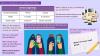
A collection of 14 screenshots from films and tv series and brief prompt questions. This resource can be used as an introduction to inference as a skill, and scaffolded with further questions. 

Popular films and TV series used such as Barbie, Bridgerton and The Avengers.

Editor's note

Level
Level 1
Level 2
GCSE L1-5
English
FE L1.15 Infer from images meanings not explicit in the accompanying text
FE L2.13 Identify implicit & inferred meaning in texts
GCSE English Reading AO2 Explain & analyse language & structure
Context
Art Film Media Music Radio TV