Hands-on / practical activity

Cooking , contructing, measuring and other kinaesthetic activities.

A couple of lessons on describing people for Entry 1-3 ESOL learners. 

Includes: 

Level
Entry Level 1
Entry Level 2
Entry Level 3
ESOL
ESOL Sc/E1.3b Ask for information
ESOL Sc/E1.4a Make simple statements of fact
ESOL Lr/E1.2e Listen & extract key information
ESOL Rt/E1.1b Obtain information from texts
ESOL Rs/E1.1a Read and recognise simple sentence structures:
ESOL Rw/E1.1a Recognise a limited number of words, signs and symbols
ESOL Wt/E1.1a Compose very simple text to communicate ideas or basic information
ESOL Ww/E1.1a Use and spell correctly some personal key words and familiar words
ESOL Sc/E2.2d Ask for factual information (present, past, future)
ESOL Sc/E2.2f Ask for descriptions of people, places and things
ESOL Sc/E2.3f Give a short description
ESOL Sd/E2.1d Express views and opinions
ESOL Lr/E2.2a Listen for detail in narratives and explanations
ESOL Lr/E2.3c Listen for a specific purpose
ESOL Lr/E2.5b Respond to requests for information
ESOL Rt/E2.1b Use reading strategies to obtain information from texts
ESOL Rw/E2.2a Recognise a range of familiar words
ESOL Wt/E2.1a Compose simple text, selecting appropriate format for the genre and purpose
ESOL Ws/E2.2a Use adjectives
ESOL Sc/E3.3d Ask for descriptions of people, places & things
ESOL Sc/E3.4f Give a short description and make comparisons
ESOL Lr/E3.2a Listen for detail in narratives & explanations
ESOL Rt/E3.8a Read every word to obtain specific information
General ESOL

A lesson on adjectives for Entry 1/2 ESOL learners. 

Includes: 

Level
Entry Level 1
Entry Level 2
English
FS English E2.20 Use adjectives and simple linking words
Adult Lit Ws/E2.2 Use Adjectives
ESOL
General ESOL
ESOL Ws/E2.2a Use adjectives

Cut and order word sort based on transport, money and grammar terms.  Tasks and extension tasks on the same sheet. Scissors needed for separating the cards. Works best with students working in pairs.

Editor's notes

Sometimes the simplest ideas are the best! With useful extension ideas. Laminate for repeated use. Also handy for Functional English alphabetical order work.

Level
Entry Level 1
Entry Level 2
English
FE E2.15 Use 1st & 2nd letters to sequence words alphabetically
ESOL
ESOL Sd/E1.1a Take part in social interaction
ESOL Rw/E1.1a Recognise a limited number of words, signs and symbols
ESOL Rw/E2.2a Recognise a range of familiar words
ESOL Rw/E2.5a Sequence words using basic alphabetical ordering skills
Context
Motor vehicles & Transport

Basic vocabulary word sorts, the first being based on fruit, vegetables and drinks, and the second on places (e.g. town, city), food and animals. Tasks and extension tasks on the same sheet. Scissors needed for separating the cards. Works best with students working in pairs.

Editor's notes

Sometimes the simplest ideas are the best! With useful extension ideas. Laminate for repeated use. Also handy for Functional English alphabetical order work

Level
Entry Level 1
Entry Level 2
English
FE E2.15 Use 1st & 2nd letters to sequence words alphabetically
ESOL
ESOL Sd/E1.1a Take part in social interaction
ESOL Rw/E1.1a Recognise a limited number of words, signs and symbols
ESOL Rw/E2.2a Recognise a range of familiar words
ESOL Rw/E2.5a Sequence words using basic alphabetical ordering skills
Context
Catering Food Nutrition
Animals, animal care, farming & equine

A set of 48 DARTs (directed activities relating to text) that can be stuck onto lolly sticks or used as is to encourage learners of all levels to interact with texts. The sticks are probably best used with realia such as: posters, local leaflets, booklets, instructions, recipes, newspaper/magazine cuttings, business cards, etc. but the resource includes a list of suitable Skillsworkshop texts.

Most of the sticks are based on the Subject content functional skills (SCFS): English (DfE, February 2018)

Level
Entry Level 1
Entry Level 2
Entry Level 3
Level 1
Level 2
English
Functional Skills English reading
Functional Skills English - writing

I put this together when I found so many of my learners trying to hone their employability skills did not know what a lot of the words on job descriptions meant. 

Resource 1 (Definition matching cards: job skills and attributes): I laminated these and cut them up and they worked in pairs or threes to match them up.

There are two other linked resources, as below, to help students with getting to grips with the keywords used in Job Descriptions and Person Specifications. 

Level
Entry Level 3
Level 1
Level 2
GCSE L1-5
T Levels - embedded maths or English
English
FE E3.11 Use strategies to find meaning of words e.g. dictionary, context, word types
FE L1.17 Read & understand a range of specialist words in context
FE L1.24 Use format, structure & language appropriate for audience & purpose
FE L2.25 Organise writing for different purposes using appropriate format & structure e.g. standard templates, paragraphs, bullet points, tables
ESOL
ESOL: Reading word focus - vocabulary, word recognition, phonics (Rw)
General
Generic resources for literacy, numeracy and beyond
Context
Employment skills & Public services
Health, Social care, Early years

This is a basic editable word wheel which you can print, cut out and attach together with a brass paper fastener.
Learners can concentrate on one word at a time. Word wheels can be used for building vocabulary, spelling practice and much more. Suitable for all levels of Functional Skills and ESOL.
Instructions and ideas are included within the PPT. For example:
Stretchy:

  • Write positive or negative words in the table
  • Look up words that are unfamiliar

Stretchier:

Level
Entry Level 2
Entry Level 3
Level 1
Level 2
English
FS Eng READING - read & understand words
FS Eng WRITING - Spelling
FS Eng WRITING Sentence structure and paragraphs
AL Apply strategies to spell correctly
AL Recognise and understand a range of words
ESOL
ESOL Writing: word focus - spelling and handwriting (Ww)
ESOL: Reading word focus - vocabulary, word recognition, phonics (Rw)
General
Generic resources for literacy, numeracy and beyond

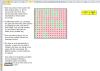
This is an Excel file with a basic odd/even activity. I took inspiration from Jean Thomas’ “Reveal the hidden shapes!” activity from 2005.

With this activity, the tutor can design a picture (or one learner can design a picture for another learner) and it produces a printable sheet. The learner then shades all the odd numbers on the sheet in one colour, and all the even numbers in a different colour – revealing a picture or a message.

There are no macros, so cross-compatibility with Excel shouldn’t be a problem.

Level
Entry Level 2
Entry Level 3
Maths
FM Context free underpinning
FM E2.3 Recognise & sequence odd & even numbers up to 100
AN N1/E3.1 place value <1000, odd / even, count in 10s /100s
AN N1/E2.2 Read, write, order & compare numbers to 100; odd even nos.
AN N1/E2.1 Count reliably to 100, count on in 2s and 10s

This is a literacy resource based around a recent news story. There are a range of tasks relating to an anti-litter app called ‘littergram’ and legal challenges made to the use of its name, with the potential to extend tasks into other aspects of littering and how the litter problem might be resolved. A final extension task asks students to take their own photographs of local examples of litter as supporting evidence for a writing activity.

Level
Level 2
Level 1
English
Functional Skills English - writing
Functional English - speaking, listening & communicating
Functional Skills English reading
General literacy / English
ICT
Functional Skills ICT: Finding and selecting information
Context
News, Politics & Government items
Electrical, Electronics & Technology

An interactive presentation to explain the meaning of nouns, verbs and adjectives and an accompanying hands-on activity to sort words into nouns, verbs and adjectives. This is good to use early in a course as it is fun and gets learners working in groups,

Level
Level 2
Level 1
Entry Level 3
Entry Level 2
English
Use knowledge of grammar
Apply grammar